Dernière sortie
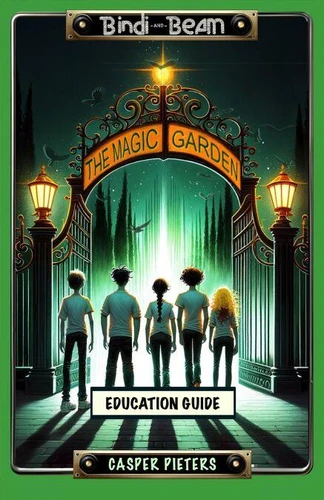
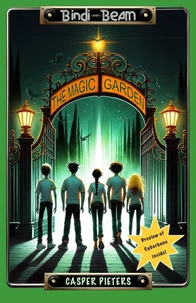
The Magic Garden Education Guide
The Magic Garden - Education Guide transforms an immersive adventure story into a flexible, classroom-ready framework for teaching digital wellbeing, gaming balance, media literacy, and social-emotional skills. Structured to mirror the chapters of The Magic Garden, the guide offers educators and families a practical way to explore how excessive gaming can affect sleep, focus, mood, health, and relationships-without relying on lectures or screen-heavy instruction.
Each chapter includes a clear theme overview, discussion prompts, and two complementary activities: a Zero-Tech Challenge focused on reflection, empathy, creativity, and teamwork, and a Tech-Integrated Challenge designed to develop ethical reasoning, inquiry skills, and design thinking. Grounded in constructivist pedagogy and multiple intelligences, the guide includes built-in adaptation strategies for early readers, ESL learners, sensory-sensitive students, and diverse instructional contexts.
Activities are suitable for tech-light classrooms, homeschool environments, libraries, and workshops. Aligned with the ISTE Standards for Students, learners are supported in becoming empowered learners, responsible digital citizens, thoughtful knowledge constructors, innovative designers, and collaborative participants. Creative implementation ideas-such as role-play, habit labs, debates, design challenges, and physical movement tasks-help learners translate story insights into real-world habits.
Downloadable worksheets, assessment rubrics, scenario cards, and chapter illustrations extend the guide into a reusable learning ecosystem. Designed for repeated use, The Magic Garden - Education Guide helps young learners build confidence, curiosity, and care as they learn to balance digital play with healthy, connected living. Testimonials"The Education Guide turned a single novel into a whole-term learning pathway.
My Year 5 and 6 students engaged deeply with the discussion prompts, and the zero-tech activities were perfect for our library space. I appreciated how sensitively it handled cyberbullying and digital citizenship without preaching. The adaptation tips helped me include ESL and neurodivergent readers, and the printable resources meant I could start immediately. It's one of the most practical, story-driven guides I've used in years." - Sarah L., Primary School Librarian "My son and I read the story together and then worked through the guide at the kitchen table.
The questions opened conversations we'd never managed to have about online behaviour and gaming. He especially loved the challenges where we had to solve problems without screens. Instead of feeling like 'homework, ' it felt like time together. I noticed him becoming more thoughtful about how he treats people online. For us, this guide built bridges, not lectures." - Megan R., parent of a 12-year-old "As a parent of an autistic child who struggles to step away from games, I was nervous this would judge rather than help.
It did the opposite. The guide's structure and clear, calm language helped my son reflect on his habits without feeling attacked. The zero-tech tasks were gentle and achievable, and the empathy activities gave us a shared vocabulary. For the first time we talked about balance and self-management instead of arguing about screen time." - Daniel K., parent
Each chapter includes a clear theme overview, discussion prompts, and two complementary activities: a Zero-Tech Challenge focused on reflection, empathy, creativity, and teamwork, and a Tech-Integrated Challenge designed to develop ethical reasoning, inquiry skills, and design thinking. Grounded in constructivist pedagogy and multiple intelligences, the guide includes built-in adaptation strategies for early readers, ESL learners, sensory-sensitive students, and diverse instructional contexts.
Activities are suitable for tech-light classrooms, homeschool environments, libraries, and workshops. Aligned with the ISTE Standards for Students, learners are supported in becoming empowered learners, responsible digital citizens, thoughtful knowledge constructors, innovative designers, and collaborative participants. Creative implementation ideas-such as role-play, habit labs, debates, design challenges, and physical movement tasks-help learners translate story insights into real-world habits.
Downloadable worksheets, assessment rubrics, scenario cards, and chapter illustrations extend the guide into a reusable learning ecosystem. Designed for repeated use, The Magic Garden - Education Guide helps young learners build confidence, curiosity, and care as they learn to balance digital play with healthy, connected living. Testimonials"The Education Guide turned a single novel into a whole-term learning pathway.
My Year 5 and 6 students engaged deeply with the discussion prompts, and the zero-tech activities were perfect for our library space. I appreciated how sensitively it handled cyberbullying and digital citizenship without preaching. The adaptation tips helped me include ESL and neurodivergent readers, and the printable resources meant I could start immediately. It's one of the most practical, story-driven guides I've used in years." - Sarah L., Primary School Librarian "My son and I read the story together and then worked through the guide at the kitchen table.
The questions opened conversations we'd never managed to have about online behaviour and gaming. He especially loved the challenges where we had to solve problems without screens. Instead of feeling like 'homework, ' it felt like time together. I noticed him becoming more thoughtful about how he treats people online. For us, this guide built bridges, not lectures." - Megan R., parent of a 12-year-old "As a parent of an autistic child who struggles to step away from games, I was nervous this would judge rather than help.
It did the opposite. The guide's structure and clear, calm language helped my son reflect on his habits without feeling attacked. The zero-tech tasks were gentle and achievable, and the empathy activities gave us a shared vocabulary. For the first time we talked about balance and self-management instead of arguing about screen time." - Daniel K., parent
Les livres de Casper Pieters
6,99 €
6,49 €
5,95 €
7,15 €
5,95 €
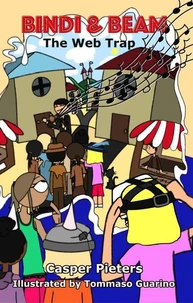
5,95 €
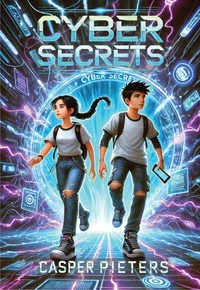
6,99 €