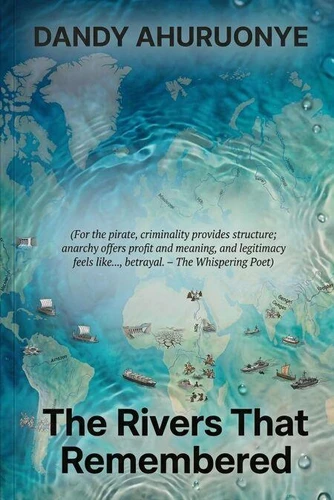
The Rivers That Remembered is a sweeping, poetic encyclopaedia of twenty-two great rivers-an ambitious work that listens to the waterways of the world as if they were living witnesses to the human condition. It is a study of history, ecology, culture, and conscience, written with the moral clarity of a chronicler and the lyricism of a poet. Across continents and centuries, rivers have carried the weight of our stories.
They have borne our victories and our vanities, our rituals and our refuse. They have been the first roads of civilisation, the boundaries of empires, the lifeblood of cities, and the silent recipients of our excesses. Long before archives, treaties, or scriptures, rivers were already recording us-etching our presence into sediment, memory, and myth. In this encyclopaedia, Ahuruonye approaches twenty-two of the world's great rivers not merely as geographical features, but as sentient participants in the unfolding human narrative.
Each river is treated as a keeper of truths: the Nile with its dynastic echoes; the Ganges with its spiritual burdens; the Mississippi with its industrial scars; the Niger with its ancestral pulse. Their currents carry the imprint of empire and faith, of conquest and survival, of the countless unnamed hands that shaped their banks and depended upon their flow. This work moves far beyond cartography or nostalgia.
It is a meditation on water as archive and oracle-revealing how every diverted channel, every dam, every flood and drought becomes a ledger of human intention. The rivers speak through their silt and silence, reminding us that the world's waterways are not passive scenery but moral barometers, reflecting the choices we make and the futures we endanger. Written with poetic precision, scholarly depth, and a profound sense of responsibility, The Rivers That Remembered invites readers to reconsider their relationship with the natural world.
It challenges us to recognise that what we pour into our rivers today-our waste, our worship, our indifference-will inevitably shape the world our children inherit. And what we take from them will determine what remains for those who come after. A work of rare beauty and intellectual force, this encyclopaedia stands as both tribute and warning: a reminder that rivers remember everything, even when we choose to forget.- Horace Abels (JHB)
The Rivers That Remembered is a sweeping, poetic encyclopaedia of twenty-two great rivers-an ambitious work that listens to the waterways of the world as if they were living witnesses to the human condition. It is a study of history, ecology, culture, and conscience, written with the moral clarity of a chronicler and the lyricism of a poet. Across continents and centuries, rivers have carried the weight of our stories.
They have borne our victories and our vanities, our rituals and our refuse. They have been the first roads of civilisation, the boundaries of empires, the lifeblood of cities, and the silent recipients of our excesses. Long before archives, treaties, or scriptures, rivers were already recording us-etching our presence into sediment, memory, and myth. In this encyclopaedia, Ahuruonye approaches twenty-two of the world's great rivers not merely as geographical features, but as sentient participants in the unfolding human narrative.
Each river is treated as a keeper of truths: the Nile with its dynastic echoes; the Ganges with its spiritual burdens; the Mississippi with its industrial scars; the Niger with its ancestral pulse. Their currents carry the imprint of empire and faith, of conquest and survival, of the countless unnamed hands that shaped their banks and depended upon their flow. This work moves far beyond cartography or nostalgia.
It is a meditation on water as archive and oracle-revealing how every diverted channel, every dam, every flood and drought becomes a ledger of human intention. The rivers speak through their silt and silence, reminding us that the world's waterways are not passive scenery but moral barometers, reflecting the choices we make and the futures we endanger. Written with poetic precision, scholarly depth, and a profound sense of responsibility, The Rivers That Remembered invites readers to reconsider their relationship with the natural world.
It challenges us to recognise that what we pour into our rivers today-our waste, our worship, our indifference-will inevitably shape the world our children inherit. And what we take from them will determine what remains for those who come after. A work of rare beauty and intellectual force, this encyclopaedia stands as both tribute and warning: a reminder that rivers remember everything, even when we choose to forget.- Horace Abels (JHB)