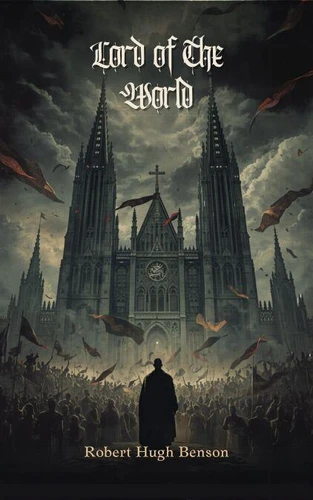
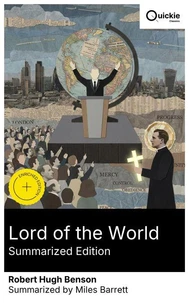
Lord of the World
Par :Formats :
Disponible dans votre compte client Decitre ou Furet du Nord dès validation de votre commande. Le format ePub est :
- Compatible avec une lecture sur My Vivlio (smartphone, tablette, ordinateur)
- Compatible avec une lecture sur liseuses Vivlio
- Pour les liseuses autres que Vivlio, vous devez utiliser le logiciel Adobe Digital Edition. Non compatible avec la lecture sur les liseuses Kindle, Remarkable et Sony
 , qui est-ce ?
Notre partenaire de plateforme de lecture numérique où vous retrouverez l'ensemble de vos ebooks gratuitement
Pour en savoir plus sur nos ebooks, consultez notre aide en ligne ici
C'est si simple ! Lisez votre ebook avec l'app Vivlio sur votre tablette, mobile ou ordinateur :

- Nombre de pages354
- FormatePub
- ISBN978-4-433-23880-3
- EAN9784433238803
- Date de parution30/05/2026
- Protection num.Digital Watermarking
- Taille466 Ko
- Infos supplémentairesepub
- ÉditeurCLXBX
Résumé
Lord of the World by Robert Hugh Benson is a powerful and visionary work of speculative fiction that explores faith, politics, technology, and the future of human civilization. First published in 1907, this influential novel presents a dramatic and thought-provoking vision of a world transformed by rapid social change, global governance, and ideological conflict.
Set in a future society marked by unprecedented technological advancement and political unity, the story follows a series of characters whose lives become intertwined as humanity faces profound spiritual and moral challenges.
As a charismatic world leader rises to prominence and gains widespread influence, long-standing beliefs and institutions are tested in ways that reshape the course of history. Benson combines compelling storytelling with philosophical and theological reflection, creating a narrative that examines the relationship between material progress and spiritual values. Through vivid scenes and escalating tensions, he explores questions of power, conscience, freedom, and the enduring search for meaning in an increasingly modern world. Themes of authority, belief, human destiny, social transformation, and moral responsibility run throughout the novel.
The story invites readers to consider the consequences of ideological movements and the role of faith and conviction in shaping the future of society. Lord of the World is widely regarded as a landmark work of early dystopian and speculative literature. Its imaginative vision, intellectual depth, and enduring relevance continue to captivate readers interested in philosophical fiction, social commentary, and explorations of humanity's future.
As a charismatic world leader rises to prominence and gains widespread influence, long-standing beliefs and institutions are tested in ways that reshape the course of history. Benson combines compelling storytelling with philosophical and theological reflection, creating a narrative that examines the relationship between material progress and spiritual values. Through vivid scenes and escalating tensions, he explores questions of power, conscience, freedom, and the enduring search for meaning in an increasingly modern world. Themes of authority, belief, human destiny, social transformation, and moral responsibility run throughout the novel.
The story invites readers to consider the consequences of ideological movements and the role of faith and conviction in shaping the future of society. Lord of the World is widely regarded as a landmark work of early dystopian and speculative literature. Its imaginative vision, intellectual depth, and enduring relevance continue to captivate readers interested in philosophical fiction, social commentary, and explorations of humanity's future.
A propos de Robert Hugh Benson
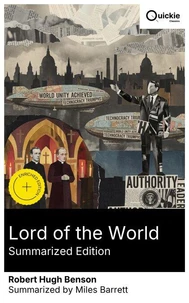
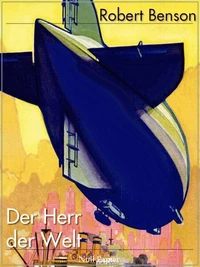
Der Herr der Welt
E-book
1,99 €

0,99 €

Lord of the World
E-book
1,99 €
None Other Gods
E-book
0,99 €
The Light Invisible
E-book
1,99 €

The Coward
E-book
1,99 €

0,99 €

0,99 €