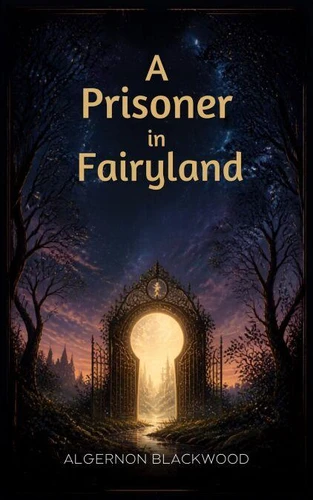
A Prisoner in Fairyland by Algernon Blackwood is a richly imaginative work of fantasy and philosophical reflection that explores the boundaries between reality, imagination, and spiritual experience. Known for his evocative prose and deep psychological insight, Blackwood creates a narrative that invites readers into a world where perception and inner transformation are intimately connected.
The story follows a central figure who becomes increasingly drawn into an extraordinary realm that seems both enchanting and unsettling.
As ordinary reality begins to fade, he finds himself immersed in experiences that challenge his understanding of existence and reveal hidden dimensions of thought, feeling, and awareness.
Blackwood's writing is atmospheric and immersive, blending poetic description with moments of profound introspection. The narrative unfolds in a dreamlike manner, encouraging readers to question the nature of reality and consider the power of imagination as a force that shapes perception and experience.
Themes of imagination, reality, consciousness, spiritual awakening, inner vision, and transformation run throughout the work.
The story suggests that what is often dismissed as fantasy may hold deeper truths about human perception and the unseen aspects of life.
A Prisoner in Fairyland stands as a distinctive example of early twentieth-century literary fantasy. It remains a compelling read for those who appreciate reflective storytelling, psychological depth, and narratives that explore the boundary between the ordinary and the extraordinary.
A Prisoner in Fairyland by Algernon Blackwood is a richly imaginative work of fantasy and philosophical reflection that explores the boundaries between reality, imagination, and spiritual experience. Known for his evocative prose and deep psychological insight, Blackwood creates a narrative that invites readers into a world where perception and inner transformation are intimately connected.
The story follows a central figure who becomes increasingly drawn into an extraordinary realm that seems both enchanting and unsettling.
As ordinary reality begins to fade, he finds himself immersed in experiences that challenge his understanding of existence and reveal hidden dimensions of thought, feeling, and awareness.
Blackwood's writing is atmospheric and immersive, blending poetic description with moments of profound introspection. The narrative unfolds in a dreamlike manner, encouraging readers to question the nature of reality and consider the power of imagination as a force that shapes perception and experience.
Themes of imagination, reality, consciousness, spiritual awakening, inner vision, and transformation run throughout the work.
The story suggests that what is often dismissed as fantasy may hold deeper truths about human perception and the unseen aspects of life.
A Prisoner in Fairyland stands as a distinctive example of early twentieth-century literary fantasy. It remains a compelling read for those who appreciate reflective storytelling, psychological depth, and narratives that explore the boundary between the ordinary and the extraordinary.


 , qui est-ce ?