SOLDES
Jusqu'à -70% sur une sélection d'articles*
Dernière sortie
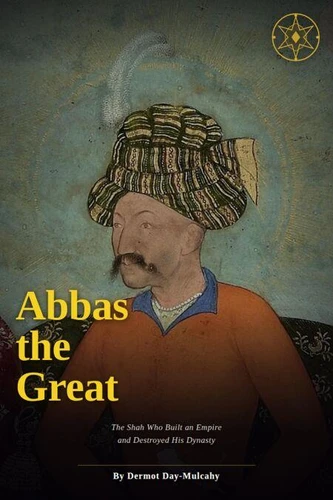
Abbas the Great: The Shah Who Built an Empire and Destroyed His Dynasty
Abbas the Great: The Shah Who Built an Empire and Destroyed His Dynasty In October 1587, a sixteen-year-old boy received the crown of a collapsing empire from a father too blind to resist. The Uzbeks held the eastern frontier. The Ottomans occupied the ancestral heartland. The treasury was empty, and the tribal chiefs who placed him on the throne already regarded him as their instrument. Within twenty years, Abbas I would drive the Uzbeks from Khorasan, expel the Ottomans from Azerbaijan, build one of the most beautiful cities in human history, and forge the most formidable military force in the early modern Islamic world.
Dermot Day-Mulcahy's monumental biography traces the full arc of the most consequential reign in the history of the Safavid dynasty. Drawing on Persian court chronicles, Georgian and Armenian sources, European travel accounts, and the physical evidence of the monuments that still stand in Isfahan, Day-Mulcahy reconstructs Abbas I in his full complexity: the military genius and the administrative revolutionary, the patron of extraordinary beauty and the author of extraordinary violence, the builder whose paranoia destroyed the succession that alone could have sustained what he built.
This is narrative history at its finest, the story of a man who made and unmade his world, and whose city endures long after the empire it was built to image has turned to dust.
Dermot Day-Mulcahy's monumental biography traces the full arc of the most consequential reign in the history of the Safavid dynasty. Drawing on Persian court chronicles, Georgian and Armenian sources, European travel accounts, and the physical evidence of the monuments that still stand in Isfahan, Day-Mulcahy reconstructs Abbas I in his full complexity: the military genius and the administrative revolutionary, the patron of extraordinary beauty and the author of extraordinary violence, the builder whose paranoia destroyed the succession that alone could have sustained what he built.
This is narrative history at its finest, the story of a man who made and unmade his world, and whose city endures long after the empire it was built to image has turned to dust.