Ours is an age of extremely fragmented experiences and identities - a fragmentation paralleled by a growing awareness that we all inhabit a common world. In reality, these two phenomena have a lot more in common than one might suspect : deeply engrained individualism and the destruction of ecosystems are two sides of the same capitalist coin. Thus, the question of "the commons" becomes more relevant than ever.
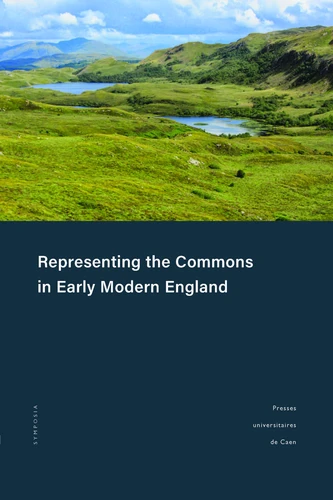
This book aims to fill a gap in the recent theoretical discussion of the commons by rethinking the notion from the perspective of early modern English literature and culture. It argues that the commons needs to be shown and represented, not just theorised or discussed in abstract terms. By focusing on some of the foundational, textually embodied forms through which this notion was represented and disseminated, the essays brought together here aim not only to interrogate the ways in which the commons was framed and appropriated in early modern English texts, but also to highlight the enduring relevance of these forms to critical discussions of the commons today.
Ours is an age of extremely fragmented experiences and identities - a fragmentation paralleled by a growing awareness that we all inhabit a common world. In reality, these two phenomena have a lot more in common than one might suspect : deeply engrained individualism and the destruction of ecosystems are two sides of the same capitalist coin. Thus, the question of "the commons" becomes more relevant than ever.
This book aims to fill a gap in the recent theoretical discussion of the commons by rethinking the notion from the perspective of early modern English literature and culture. It argues that the commons needs to be shown and represented, not just theorised or discussed in abstract terms. By focusing on some of the foundational, textually embodied forms through which this notion was represented and disseminated, the essays brought together here aim not only to interrogate the ways in which the commons was framed and appropriated in early modern English texts, but also to highlight the enduring relevance of these forms to critical discussions of the commons today.