SOLDES
Jusqu'à -70% sur une sélection d'articles*


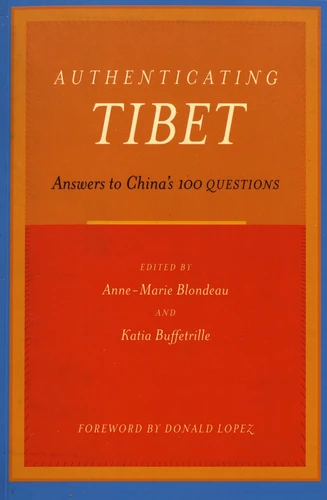
Authenticating Tibet. Answers to China's 100 Questions
Par : ,Formats :
- Paiement en ligne :
- Livraison à domicile ou en point Mondial Relay indisponible
- Retrait Click and Collect en magasin gratuit
- Réservation en ligne avec paiement en magasin :
- Indisponible pour réserver et payer en magasin
- Nombre de pages364
- FormatGrand Format
- PrésentationBroché
- Poids0.555 kg
- Dimensions15,5 cm × 22,5 cm × 2,5 cm
- ISBN978-0-520-24928-8
- EAN9780520249288
- Date de parution01/01/2008
- ÉditeurUniversity of California Press
- PréfacierDonald Lopez
Résumé
The land of Tibet—its people. culture, and religion—has long been both a source of fascination and an object of contention. Tibet has also been at the center of particular controversy since 0959, when China's "peaceful liberation' of the Land of Snows led to the Lhasa uprising and the Dalai Lama's escape to India. In 1989 the Chinese government published a booklet. loo Questions about Tibet. that sought to counter the criticism generated by the Dalai Lama and his followers and to offer the PRC's "truth" about Tibet and Tibetans.
Authenticating Tibet : Answers to China's too Questions is a response to that booklet. In Authenticating Tibet. international Tibet scholars offer clear, unbiased answers to the too questions and deal evenhandedly with both China's perception about Tibet and that of the Dalai Lama and his supporters. Although these experts refute many of China's assertions, they do not offer blanket endorsements of the claims made by the pro-Tibet movement.
Instead, they provide an accurate, historically based assessment of Tibet's past and its troubled present. Designed for use by o general audience, the book is an accessible reference, free of the polemics that commonly cloud the Tibet controversy.
Authenticating Tibet : Answers to China's too Questions is a response to that booklet. In Authenticating Tibet. international Tibet scholars offer clear, unbiased answers to the too questions and deal evenhandedly with both China's perception about Tibet and that of the Dalai Lama and his supporters. Although these experts refute many of China's assertions, they do not offer blanket endorsements of the claims made by the pro-Tibet movement.
Instead, they provide an accurate, historically based assessment of Tibet's past and its troubled present. Designed for use by o general audience, the book is an accessible reference, free of the polemics that commonly cloud the Tibet controversy.